Mohair
This page highlights the qualities of regenerative and wildlife friendly certified mohair, the efforts producers make to deliver this fiber, and some of the landscapes and wildlife that benefit from the measures adopted in its production. it also invites you to become part of this sustainable and high-quality mohair supply chain model.
Diamond Fiber, Priceless Story
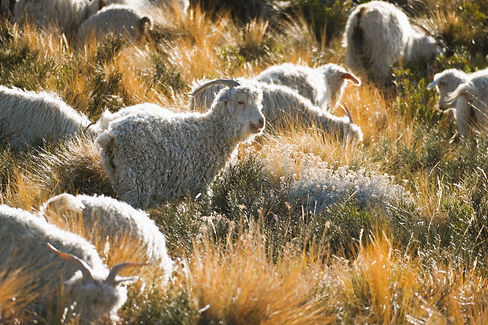
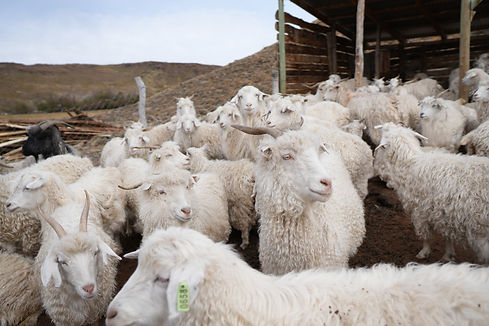
Mohair is the fleece of the Angora goat and is one of the world’s most beautiful natural fibers; it stands out for its white, silky, and glossy fiber. Due to its rapid growth, the fiber can be harvested twice a year to meet the current demands of the textile industry. Regenerative and Wildlife Friendly® certified producers of mohair live and work in the spectacular landscapes of northern Patagonia, Argentina. Alongside the Wildlife Conservation Society (WCS), they make significant efforts to develop regenerative grazing and Wildlife Friendly practices to promote climate resilience and coexistence between wildlife and goat fiber production.
Mohair Fiber
This beautiful and noble natural fiber is lustrous, versatile, and offers an exceptional color reflection. Mohair has become a symbol of luxury and exclusivity.
Autumn
(Southern Hemisphere)
Shearing: from March 15th to April 15th
Stockpiling: from April 15th to May 15th.
Available from May 15th.
Average amount: 7,000 kg of raw mohair.
Spring
(Southern Hemisphere)
Shearing: from September 15th to October 15th
Stockpiling: from October 15th to November 15th.
Available from November 15th.
Average amount: 20,000 kg of raw mohair.
Patagonian Producers
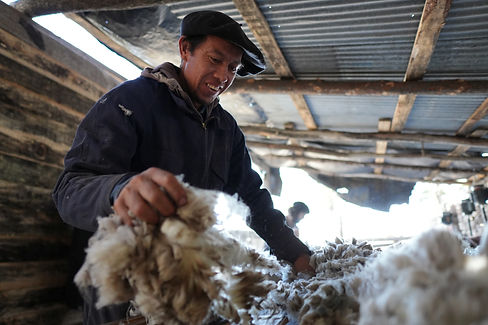
North-central Neuquén, in northern Patagonia, is home to producers who dedicate their lives to breeding Angora goats and constantly improving the quality of this wonderful fiber. The producers are mostly small-scale, but they have shown that when they unite (as in the Agricultural Cooperative of Small Producers of Central Neuquen) they get much better results, in terms of fiber quality, logistics, and of course, profits and sustainability. The Cooperative produces more than 20,000 kilograms of mohair annually. Working together with WCS Argentina, they are finding ways to regenerate grasslands and soils and to coexist with wildlife, using methods to avoid predation without killing native carnivores or scavengers.
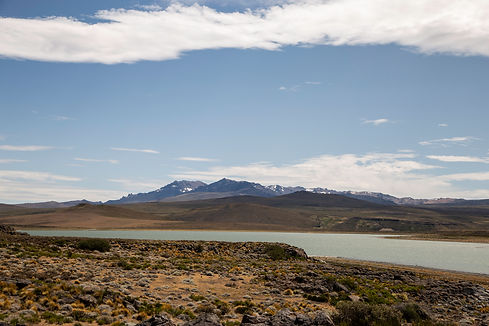
Patagonian Landscapes
In Neuquén province, more than 50,000 hectares are being protected through Regenerative and Wildlife Friendly management methodologies adopted by herders , such as using livestock guardian dogs and predator deterrent lights. The area includes Laguna Blanca National Park, home to large numbers of birds, such as flamingos and black-necked swans, and the critically endangered Patagonian frog, a local endemic species.
Regenerating Pastures and Coexisting with Wildlife
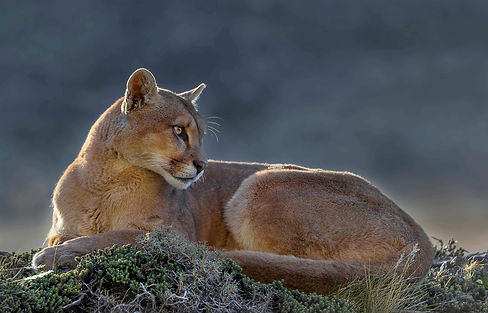
Regenerative and Wildlife Friendly certified mohair fiber production is based on the integration of regenerative grazing and coexistence practices between goat husbandry and wildlife. Patagonian grasslands and endangered species like the Andean cat and Andean condor or key species like puma, guanaco, lesser rhea, and culpeo fox are protected by certified producers. WCS Argentina and Wildlife Friendly® promote the use of non-lethal methods to minimize predation, restore pastures and soils, and conserve functional populations of native carnivores and scavengers .