
Merino
This page highlights the qualities of certified merino wool from Patagonia, the efforts producers make to supply this fiber, and some of the landscapes and wildlife benefited by its regenerative and wildlife friendly production. We invite you to become part of this sustainable merino supply chain.
A Fiber with a Remarkable Story
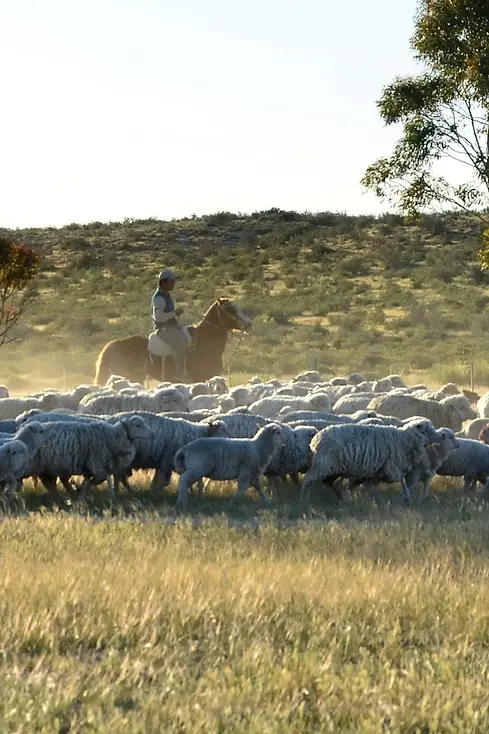
Merino wool is a natural fiber produced by Merino sheep; it’s thinner and softer than regular wool, and offers many benefits thanks to its outstanding characteristics. Regenerative and Wildlife Friendly® certified producers of Merino live and work in contrasting and spectacular landscapes throughout Patagonia, Argentina. Alongside Wildlife Conservation Society (WCS), they make significant efforts to develop regenerative grazing and Wildlife Friendly practices to promote climate resilience and co-existence between wildlife and sheep wool production in the region.
An Outstanding Fiber
Merino wool is very popular for its warmth, lightness, and softness
MICRONS
Its very thin diameter ranges from 17 to 24 microns.
USES
From haute couture pieces to rugged outdoor garments, Merino wool adapts to many uses.
SEASONS
Shearing: October/November
Stockpiling: November
Available from November
Patagonian Producers
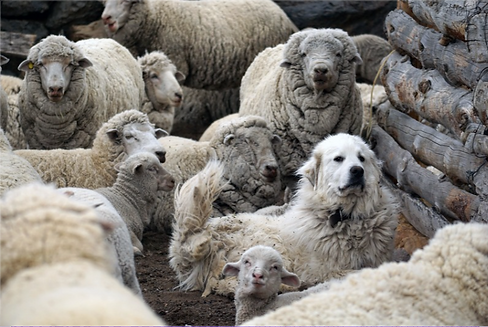
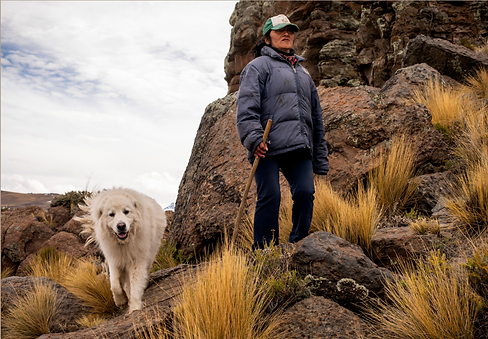
Wildlife Friendly® certified producers in Patagonia make great efforts to keep the sheep farming business alive in the area, steering their practices towards sustainable and regenerative livestock farming. They manage their land to allow their production to coexist with wildlife. Additionally, they use non-lethal methods—such as livestock guardian dogs and deterrent lights—to control predation by pumas, foxes, and other wild carnivores, and manage grazing to favor grassland and soil regeneration, helping to mitigate the impacts of climate change.
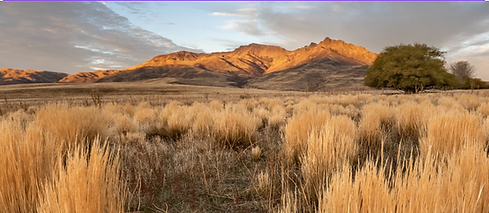
Patagonian Landscapes
Northern Patagonia, Neuquén
In Neuquén province, more than 50.000 ha. are protected by the Regenerative and Wildlife Friendly management methodologies adopted by herders. The area includes Laguna Blanca National Park, a key site for a large number of birds, such as flamingos and black-necked swans, and the critically endangered and endemic Patagonian frog. The area is also home to the Andean condor, Andean cat, and more common species such as puma and red fox, among others.
World Heritage Site Península Valdés, Chubut
Certified ranches in the area total 33, 000 ha. of land under a Regenerative and Wildlife Friendly management system and produce around 50 tons per year of fine Merino wool in harmony with populations of guanacos, rheas, and maras. As the properties comprise over 70 km of coastline, the group stewards some of the most important sea lion and elephant seal colonies in the area, as well as marine and migratory birds and thousands of southern right whales.
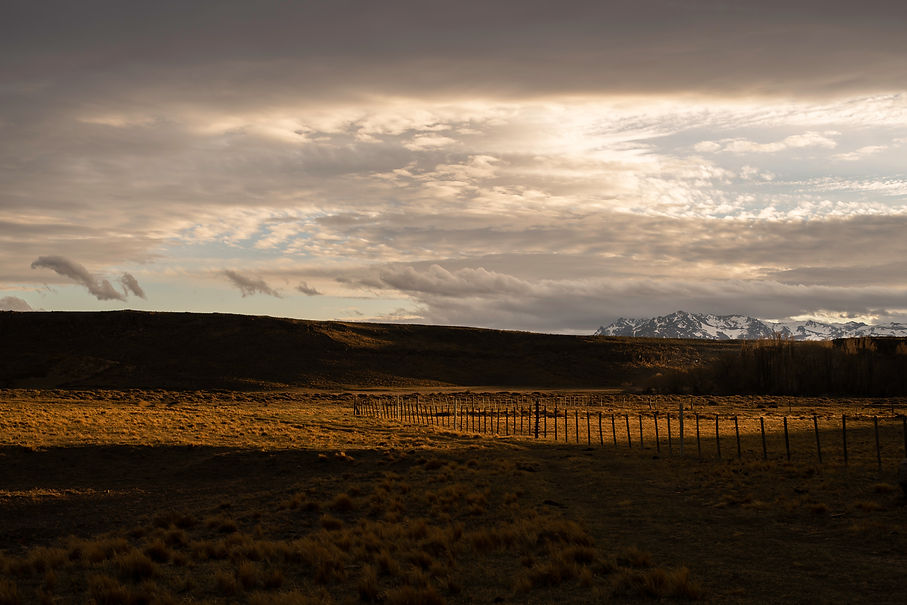
Patagonian Landscapes
La Rosa, La Estrellita and La Filomena Ranches, Chubut These ranches cover 98,500 hectares, and combine sustainable livestock production with renewable energy from the Garayalde wind farm. The owner´s objective is to develop sheep and cattle ranching in harmony with wildlife and the environment.
Morro Chico and El Zurdo Ranches, Santa Cruz
These ranches, encompassing 27 000 ha., have modernized and adapted their production structure and philosophy. The owners have initiated an intense process to modify
management of the establishments towards a
Regenerative and Wildlife Friendly system.
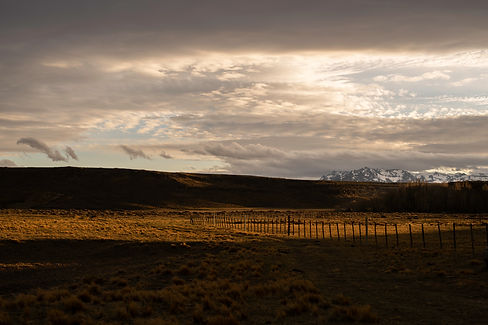
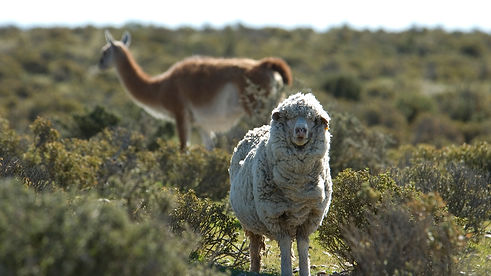
Pasture Regeneration and Coexistence with Wildlife
The 270,000-square-mile Patagonian Steppe hosts a
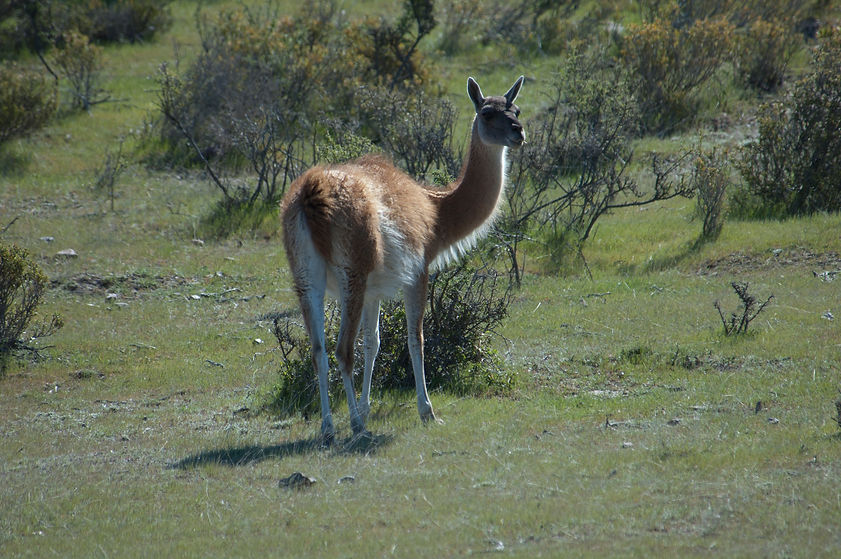
significant diversity of wildlife. It is the last stronghold of the guanaco, including the world’s largest migratory population of the species. It is also home to the southernmost population of the endangered Andean cat, Darwin’s rhea, Andean condor, many endemic species of plants and lizards, tens of thousands of swans and flamingos, and native predators like pumas and foxes. Although it may appear untamed and timeless, human activities have greatly altered its biodiversity. Certified. Regenerative and Wildlife Friendly Merino wool production is centered on both regenerative grazing and on the coexistence between sheep ranching and healthy wildlife populations.