
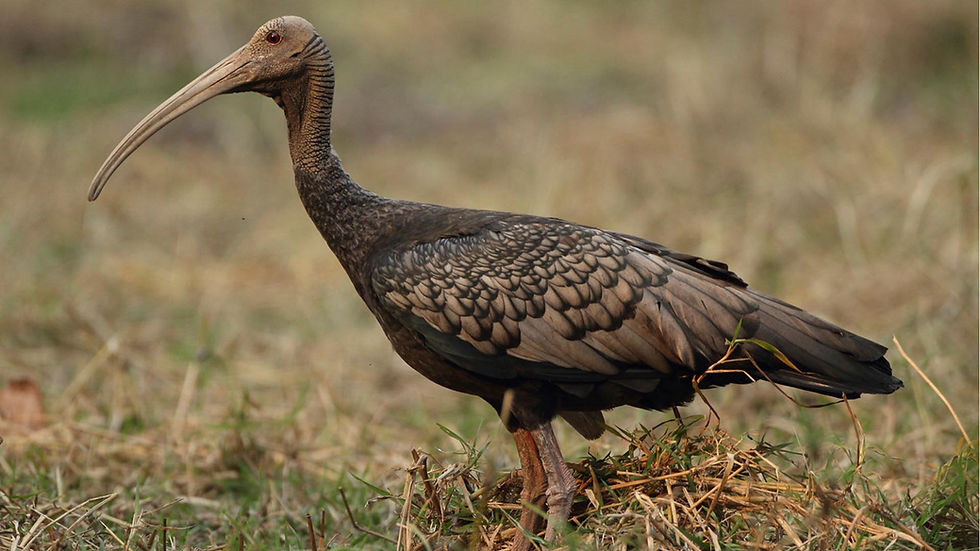
Certified Wildlife Friendly® Enterprises that Help Conserve Giant Ibis

Giant Ibis
(Thaumatibis gigantean)
Population Trend: Decreasing
IUCN Status:
CRITICALLY ENDANGERED
See below to learn how we are helping

Cambodia
The Conflict
The Northern Plains of Cambodia are home to the greatest aggregation of large mammals and water birds beyond the savannas of Africa. The Giant Ibis is Cambodia’s National Bird and one of 50 endangered species in the Northern Plains. The forests and wetlands of the Northern Plains, which these endangered birds depend on for habitat, are used by long-established local communities. These communities are very poor and are heavily dependent upon forest and natural resources for their livelihoods. Agricultural-based livelihood development is limited by low prices offered by the few traders that come to these remote villages. Worse, the same traders are the only source of credit, usually at usuriously high rates. This provides little incentive for communities to improve agricultural efficiency, and means that the majority of households are trapped in debt cycles to the traders. With growing human populations the pressure on land resources is increasing, leading to increasing forest clearance in key conservation areas and conflicts between communities and government agencies responsible for environmental protection. As land conversion is one of the few easily available forms of wealth, community members have little incentive to engage in conservation. Successful wildlife and habitat conservation therefore depends on engaging local families in ways that directly link local economic and social development to natural resource conservation.
The Solution
The Wildlife Conservation Society Cambodia (WCS) has been supporting and promoting Ibis Rice™ for several years. The current focus of Wildlife Friendly® product development is in the Northern Plains. The Ibis Rice™ program was started, in part, because of the enormous market opportunity provided by Siem Reap. Market research conducted by WCS indicated that a significant number of buyers (mainly up- market hotels and restaurants) exist in Siem Reap, many of whom would be willing to pay a premium for Certified Wildlife Friendly® products. The cooperative marketing model is also an important innovation offered by the project. Communities receive a share of the profits and assistance to move up the value chain (e.g. through training in value-added processing, assistance with capital investment, and access to necessary micro loans) so that farmers capture a greater proportion of the revenue and have an incentive to restrict farm expansion. In addition to product sales, villagers are able to benefit from ecotourism and conserve the environment of Tonle Sap, the largest freshwater floodplain lake in the world.
The Conservation Enterprise
A winner of the World Bank’s Development Marketplace program in 2008, Certified Wildlife Friendly® Ibis Rice™ is currently being featured in fine restaurants and hotels near Cambodia’s famed AnkorWat temple. Hotels and restaurants in Siem Reap serving Ibis Rice™ include:
Hotels: La Maisond’Angkor, Le Meridien Angkor, La Residence d’Angkor, SoriaMoria, Victoria Angkor Resort & Spa, Hotel de la Paix, The Villa Siem Reap and Sojourn; Now in Phnom Penh: The Boddhi Tree
Restaurants: Kamasutra, Sugar Palm, and V & A. Now in Phnom Penh: Le Wok.
Ibis Rice™ will be gaining organic certification in addition to Certified Wildlife Friendly® and will be available for export markets in mid 2016.
Wildlife Conservation Society – Cambodia, Ibis Rice™
Facebook
Twitter
Email: nick@smpcambodia.org
Tel: +855 17 548 300 (Cambodia)