

Certified Wildlife Friendly® Enterprises that Protect Elephants

African Elephant
(Loxodonta africana)
IUCN Status:
VULNERABLE
See below to learn how we are helping
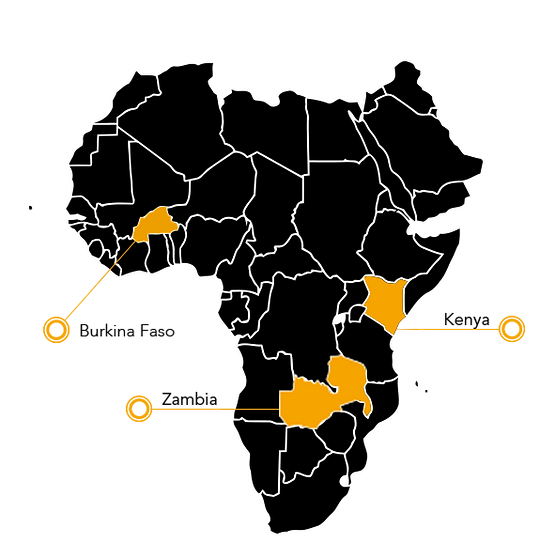
Burkina Faso
The Conflict
People of Burkina Faso are amongst the least economically advantaged in the world. Basic livelihood opportunities are mainly linked, at the rural level, to wildlife habitat destruction and transformation into monoculture agricultural production. This is especially true for cotton production, which is extremely destructive to the environment including negative impacts to habitat that elephants depend on. While shea seeds have been processed for generations to be used in local cooking in West Africa, unfortunately the local value of the wild plants’ seeds is not enough to compete economically with environmentally-destructive agriculture practices.
The Solution
French beauty brand ELEPHAS works with a local NGO, NatureDev, to ensure that one of the most dynamic elephant populations in West Africa can thrive between the Nazinga Ranch and the Kabore Tambi National Park. An agreement has been finalized with local communities, the state, and the regional administration to secure 11,000 acres for sustainable collection of shea seeds for exclusive use by the women of 11 villages. This land is crucial to secure a natural corridor for elephant migrations from the Nazinga reserve to the Kabore Tambi National Park. NatuDev is working with the Wildlife and Forestry Department to protect habitat within the elephant corridor. In the Nazinga Ranch, the elephant population is monitored by a team of rangers to protect against poaching. By paying a fair price for shea butter, ELEPHAS helps to generate income for local for women and links these benefits directly to an elephant conservation management plan which provides incentives for elephant conservation. .
Each Elephas soap sold will ensure a street child in Ouagadougou is provided a meal at school via a local organization. Furthermore, a woman from the women’s union receives an equivalent of 1kg of grain. This ensures that ELEPHAS goes above and beyond paying a fair price and demonstrates the link between the sales of the soap and the concrete actions for elephant conservation.
The Conservation Enterprise
Currently, ELEPHAS has Certified Wildlife Friendly™ shea butter available as well as soap made with shea butter, baobab oil, desert date oil, and fragrance made from other Certified Wildlife Friendly™ essential oils from Madagascar. Shea butter is the primary ingredient in ELEPHAS beauty products, demonstrating the company’s commitment to high quality ingredients while avoiding any palm oil derivatives, petrochemicals, or plastic packaging. ELEPHAS soaps are handmade in the town of Leo, at the local soap factory run by the Nununa Federation, a women’s cooperative.
ELEPHAS products can be purchased here.
Rukinga, Kenya
The Conflict
Lack Of Jobs & Poaching
In rural areas far from the forces of urban job creation, families often turn to poaching wildlife in order to feed themselves. In addition conflicts with livestock and large predators like lions leads to retaliatory killings.
The Solution
Wildlife Works rangers work side by side with Kenya Wildlife Service (KWS) rangers who are armed, trained in combat, and who are permanently stationed on the Rukinga Wildlife Sanctuary to find and apprehend poachers.
Elephants also needs habitat – a place to live. Wildlife Works is the world’s leading REDD+ (Reducing Emissions from Deforestation and Degradation) project development and management company with an effective approach to applying innovative market based solutions to the conservation of biodiversity. REDD+ was originated by the United Nations (UN) to help stop the destruction of the world’s forests.
Job creation is the essence of the Wildlife Works REDD+ conservation strategy. Jobs include conservation rangers, factory workers, horticulturalists, machinists, seamstresses, foresters, carpenters, construction workers, drivers, mechanics and administrative personnel. Wildlife Works also finances the development of small businesses such as an eco-clothing factory, and sustainable charcoal production and distribution.
Wildlife Works’ ground-breaking REDD+ initiative protects over 500,000 acres of highly threatened Kenyan forest, securing the entire wildlife migration corridor between Tsavo East and Tsavo West National Parks, and brings benefit to more than 100,000 people in surrounding communities.
The Kasigau Corridor REDD+ project was awarded the additional distinction of Gold level status by the Climate, Community and Biodiversity Alliance (CCBA) for exceptional biodiversity and climate benefits. The project area is home to a fantastic diversity of over 50 species of large mammals, more than 20 species of bats and over 300 species of birds. Important populations of IUCN Red List species include Grevy’s Zebra, Cheetahs, Lions, African Wild Dog, and over 2000 African elephants.
The Conservation Enterprise
At Wildlife Works, the mission is clear: to provide people in wildlife-rich areas with sustainable economic alternatives to poaching and deforestation. When you buy a Wildlife Works product, you become an agent for conservation, and are wearing the brand that says you won’t sit quietly while the last wild things in the last wild places disappear forever.
Shop Wildlife Works products here.
Zambia
The Conflict
Lack of Jobs & Poaching
In the Luangwa Valley of Zambia, people discovered that using snares to kill wild animals was a good substitute for farming. Thousands of animals were killed annually, often slow and agonizing deaths, strangled and cut by steel wire. Such exotic and charismatic species as the elephant, lion, wild dog, kudu and roan were vulnerable to this horrific fate as snaring replaced farming. In 2001, we conservatively estimated that between 4000 to 8000 farmers resorted to setting snares and illegal hunting (poaching) to feed and support their families. Those poaching households with firearms earned 2 to 3 times the annual income of non-hunting families ($80 yearly) in the Luangwa Valley.
The Solution
COMACO (Community Markets for Conservation) works with over 61,000 Zambian farmers across over 70,000 sq.km of the Luangwa Valley, and encompassing communal lands for 63 chiefdoms that surround five national parks to provide a solution so humans and wildlife can coexist. This revolutionary approach that uses rural-based markets and conservation farming techniques marketed under under the It’s Wild brand. COMACO provides farmers with higher prices and access to markets in exchange for abandoning poaching, and adopting specific land use practices to maintain soil fertility, choose crops that help reduce conflicts with wildlife, and commit to stop wildlife snaring or illegal hunting. All proceeds from sales are reinvested in efforts to achieve food security, increased rural income, and improved natural resource management.
The Conservation Enterprises
Certified products include rice, a soy protein supplement, peanut butter, and honey – which are marketed locally and regionally – and Snarewear, jewelry crafted from snares confiscated by local farmers to protect wildlife and available to consumers globally. Consumers who buy It`s Wild! products contribute directly to the conservation of wildlife and to the welfare of small-scale farmers.
It’s Wild and COMACO websites
Facebook
Twitter
Tel: In Zambia call +260 6480 074
Email: sales@itswild.org